
How Many Grams are in 1 oz of Gold: The Ultimate Conversion Guide 2026
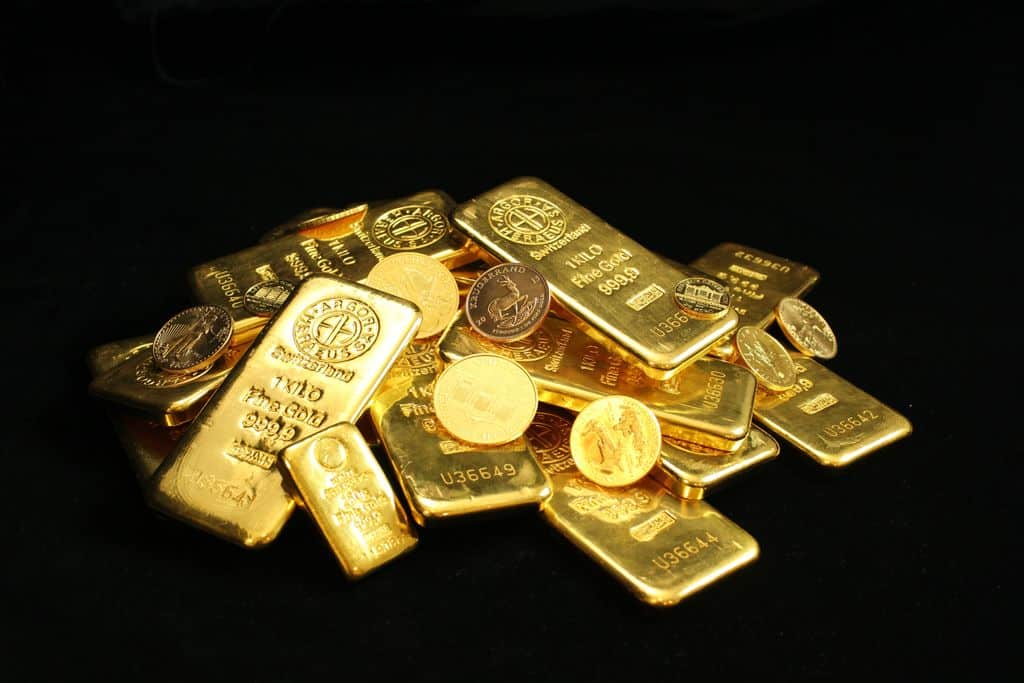
How many grams are in 1 oz of gold is not just a trivial fact—it’s a crucial tool that can save you thousands of dollars in potential losses or missed opportunities.
Whether you’re a seasoned investor eyeing gold bullion for diversification, a beginner curious about 1 oz gold to grams conversions, or someone exploring precious metals amid economic uncertainty, this knowledge forms the foundation of informed decision-making.
Right upfront, let’s address the core question: 1 troy ounce of gold equals exactly 31.1035 grams. This isn’t an arbitrary number; it’s the standard used globally in the precious metals industry, ensuring consistency in trading, pricing, and valuation.
Why does this matter so much for buyers and investors? Imagine purchasing a 1 oz gold bar only to discover discrepancies in weight that could erode your returns.
In 2026, with gold prices hovering around record highs—often exceeding $5,000 per ounce due to geopolitical tensions and inflation hedges—even a small misunderstanding in units can lead to significant financial implications.
For instance, confusing the troy ounce with the everyday avoirdupois ounce (used for groceries) might result in overpaying or under-receiving gold. This guide delves deep into the intricacies of gold weight conversions, helping you navigate these pitfalls with confidence.
Throughout this comprehensive article, we’ll explore everything from the historical roots of the troy ounce to practical applications in trading, complete with charts, formulas, and expert tips.
By the end, you’ll not only know how many grams in 1 oz of gold but also how to leverage this for smarter investments. And if you’re ready to act, check out our recommended 1 oz gold products from trusted dealers to start building your portfolio today.
Here’s a handy quick-reference table for common conversions:
| Ounces (Troy) | Grams | Equivalent in Common Items |
|---|---|---|
| 1 oz | 31.1035 g | About the weight of a small handful of coins |
| 0.5 oz | 15.5518 g | Similar to a standard AA battery |
| 2 oz | 62.207 g | Roughly a deck of playing cards |
| 10 oz | 311.035 g | Comparable to a smartphone |

Understanding Basic Units: Ounces and Grams in Gold Measurement
Diving into the fundamentals of gold measurement, it’s essential to grasp the distinction between ounces and grams, as these units form the backbone of all precious metal transactions.
The ounce, particularly the troy ounce, is a unit of weight specifically tailored for metals like gold and silver, while the gram is part of the metric system, offering a decimal-based approach that’s universally adopted in scientific and international contexts.
Let’s break this down: the troy ounce weighs approximately 31.1035 grams, whereas the avoirdupois ounce—commonly used for everyday items like food or household goods—clocks in at about 28.3495 grams.
This difference might seem minor, but in the high-stakes world of gold investing, it can translate to substantial value discrepancies.
To illustrate, consider how these systems evolved. The metric system, with its base in grams, was developed during the French Revolution in the late 18th century to standardize measurements across borders, promoting ease in calculations and trade.
In contrast, the imperial system, which includes ounces, has roots in ancient Roman and medieval English practices, where weights were often tied to tangible items like grains of barley.
For gold, the industry overwhelmingly favors the troy ounce because it provides a consistent standard that aligns with historical bullion trading norms.
According to standards set by organizations like the London Bullion Market Association (LBMA), all gold bars and coins are assayed and priced per troy ounce, ensuring transparency in global markets.
Here’s a comparative table to highlight the key differences:
| Unit | Grams Equivalent | Common Use Cases |
|---|---|---|
| Troy Ounce | 31.1035 g | Gold bullion, silver, precious metals |
| Avoirdupois Ounce | 28.3495 g | Food, postage, everyday weighing |
The preference for troy ounces in gold stems from its precision in smaller quantities, ideal for high-value items where even fractions matter.
In metric vs. imperial debates, the gram’s advantage lies in its scalability—1 kilogram equals 1,000 grams, simplifying larger trades—while the imperial system’s ounces require more complex conversions.
In practice, understanding these basic units empowers investors to verify gold weight during purchases.
Whether you’re dealing with gram gold bars popular in Asia or 1 oz gold coins favored in the West, knowing the interplay between ounces and grams ensures you’re not shortchanged.
This foundation sets the stage for exploring the rich history of the troy ounce, where medieval trade fairs shaped modern standards.


The Troy Ounce Explained: History and Origins
The troy ounce, central to answering how many grams are in 1 oz of gold, has a fascinating history that traces back to medieval Europe, specifically the 12th-century trade fairs in Troyes, France.
This bustling Champagne region hub became synonymous with fair and standardized weights, giving rise to the term “troy” from the city’s name.
Merchants from across Europe converged here, necessitating a reliable system to trade precious metals without disputes. The troy ounce evolved from the Roman uncia, a twelfth of a Roman pound, which was approximately 27.3 grams—close but refined over centuries into the modern 31.1035 grams.
By the 15th century, the troy system had spread to England, formalized in statutes that mandated its use for gold and silver. This was crucial during the Renaissance, when alchemy and early chemistry demanded precise measurements.
Fast-forward to the 19th century, and the troy ounce became entrenched in global bullion markets through British imperial influence.
Today, the London Bullion Market Association (LBMA) upholds these standards, ensuring that every 1 oz gold bar meets exact specifications for purity and weight.
The LBMA’s Good Delivery List, for instance, requires bars to be between 350 and 430 troy ounces, but the 1 troy oz remains the benchmark for spot pricing.
To visualize this evolution, consider a timeline:
- Ancient Rome (c. 27 BC): Uncia system establishes fractional weights.
- 12th Century: Troyes fairs standardize troy pound (12 troy ounces).
- 1527: England adopts troy for precious metals via royal decree.
- 1919: LBMA founded, modernizing troy standards.
- 2026: Troy ounce integral to digital gold trading platforms.
This timeline infographic illustrates how historical events shaped current practices, directly impacting global gold pricing. For example, the troy ounce affects daily spot prices, which in 2026 are influenced by central bank reserves and ETF demands.
Understanding this history not only enriches your knowledge but also highlights why the troy ounce persists: its consistency fosters trust in an otherwise volatile market.

Exact Conversion: How Many Grams in 1 oz of Gold?
At the heart of any gold conversion query lies the precise mathematics: 1 troy oz of gold equals 31.1034768 grams.
This figure isn’t rounded arbitrarily; it’s derived from the international definition where one troy pound equals 373.2417216 grams, divided by 12 ounces.
For practical purposes, most use 31.1035 grams, but for high-precision trades, the full decimal ensures accuracy.
Breaking down the formulas:
- Grams to Troy Ounces: Ounces = Grams ÷ 31.1034768
- Troy Ounces to Grams: Grams = Ounces × 31.1034768
Examples abound: For 0.5 oz of gold, multiply by 31.1034768 to get 15.5517384 grams. Scaling up, 10 oz yields 311.034768 grams, ideal for larger bullion. To embed this interactively, consider a simple JavaScript calculator:
function ozToGrams(oz) {
  return oz * 31.1034768;
}
console.log(ozToGrams(1)); // Outputs: 31.1034768
This tool suggestion allows users to input values for real-time conversions, enhancing engagement. Remember, these calculations assume pure gold; alloys adjust for density.

Differences Between Troy and Avoirdupois: Avoiding Common Pitfalls
The stark differences between troy and avoirdupois ounces can lead to costly mistakes, with the former at 31.1035 grams and the latter at 28.3495 grams—a roughly 10% variance.
Scammers exploit this, advertising 1 oz gold using avoirdupois to shortchange buyers.
Case studies include jewelry scams where items are weighed in avoirdupois but sold as troy, or bullion deals mislabeled.
Key pitfalls to avoid:
- Mislabeling in Sales: Always confirm “troy” on certificates.
- Jewelry vs. Bullion: Jewelry often uses grams; bullion sticks to troy.
- Online Calculators: Use reputable ones specifying troy.
Here’s a conversion table for 1-10 oz in both systems:
| Ounces | Troy Grams | Avoirdupois Grams |
|---|---|---|
| 1 | 31.1035 | 28.3495 |
| 2 | 62.207 | 56.699 |
| … | … | … |
| 10 | 311.035 | 283.495 |
Practical Applications in Gold Trading and Investing
In gold trading, weight conversions directly influence pricing strategies.
The spot price per troy ounce—currently around $5,107 per ounce as of January 30, 2026—means a 1 oz bar could cost over $5,100 plus premiums.
Gram bars, at about $164 per gram, appeal for smaller investments.
Bullion forms vary:
- Bars: 1 oz bars offer liquidity; larger for discounts.
- Coins: American Eagle (1 oz) includes collectible value.
Pros of grams: Affordability; cons: Higher premiums per unit. For oz: Bulk savings.
2026 trends show gold up 17-81% year-over-year, with predictions reaching $5,055-$6,200 by year-end due to central bank buying and geopolitical risks.
ROI example: Investing $5,107 in 1 oz today; if prices hit $6,000, that’s 17% return.

Buying Gold: Tips for Using Weight Conversions Wisely
When buying gold, verify purity: 999.9 fine means 31.1035g pure in a 1 oz bar.
Compare dealers like Buy Cheap Gold Bars Africa, JM Bullion (low premiums) vs. APMEX (variety).
Tips:
- Check Certifications: LBMA-accredited for authenticity.
- Storage: Home safes or depositories; consider shipping weights.
- Taxes: VAT varies; U.S. sales tax on coins under certain thresholds.
Explore affiliate links for 1 oz gold bars from reputable sources.
Advanced Topics: Gold in Jewelry, Mining, and Beyond
While investment gold like bars and coins adheres strictly to the troy ounce system and high purity standards (typically 999.9 fine or .9999), gold in jewelry introduces the karat system, which measures purity differently and often intersects with weight conversions for accurate valuation.
The karat scale divides gold into 24 parts: 24K represents pure gold (100% or 999 fine), weighed in troy ounces for consistency with bullion standards.
Lower karats alloy gold with metals like copper or silver for durability—18K is 75% pure (18/24 parts gold), 14K is 58.3% pure, and 10K is 41.7% pure.
This means a 1 troy oz piece of 18K jewelry contains only about 23.3276 grams of pure gold (75% of 31.1035 grams), with the rest being alloy.
Buyers must calculate pure gold content carefully to assess true value, especially in regions like Asia where 22K (91.67% pure) jewelry dominates for both wear and investment.
Gold mining output is predominantly reported in troy ounces or metric tonnes globally. According to the World Gold
Council, mine production reached a record 3,672 tonnes in 2025 (equivalent to roughly 118 million troy ounces), with modest growth expected into 2026 amid high prices and exploration efforts.
Major producers include China, Russia, Australia, and Canada.
Global standards ensure uniformity: the LBMA governs bullion purity and good delivery, while ISO standards (e.g., ISO 15093:2020 for high-purity determination via ICP-OES) and millesimal fineness (parts per 1,000) provide precise testing for jewelry and bullion.
These frameworks maintain trust across markets, from artisanal mines to refineries, bridging troy ounce precision with real-world applications in jewelry craftsmanship and industrial uses like electronics. Understanding these distinctions sharpens your edge in evaluating gold beyond basic bullion.
Frequently Asked Questions
Is 1 oz of gold always 31 grams?
No, it’s not exactly 31 grams—1 troy ounce of gold equals precisely 31.1035 grams (often rounded to 31.1 grams for simplicity). The exact value is 31.1034768 grams, based on the international troy ounce standard used exclusively for precious metals like gold and silver. Always use troy ounces for accurate gold bullion calculations to avoid shortfalls.
What’s the difference between a troy ounce and a regular ounce?
A troy ounce (used for gold) weighs 31.1035 grams, while a standard avoirdupois ounce (for everyday items like food) is 28.3495 grams—about 10% lighter. Mixing them up can lead to costly errors when buying or selling gold bars or coins.
How do I convert kilograms to troy ounces for gold?
Multiply kilograms by 32.1507 (since 1 kg = 1,000 grams, and 1 troy ounce = 31.1034768 grams). So, 1 kg of gold equals approximately 32.15 troy ounces. This is handy for larger kilo gold bars popular among serious investors.
Does the purity affect the weight conversion?
No—the troy ounce to grams conversion applies to pure gold weight. For 999.9 fine gold (standard bullion), 1 troy oz is fully 31.1035 grams of pure gold. Lower-purity items (e.g., some jewelry) contain less pure gold per troy ounce.
Why is gold priced per troy ounce instead of grams?
The troy ounce has been the global standard for centuries (via LBMA and historical trade), ensuring consistency in gold spot prices (currently around $5,000–$5,500 per ounce in early 2026). Gram pricing exists but is less common for international trading.
How many grams are in a 1 oz gold coin like the American Eagle?
Exactly 31.1035 grams of total weight for a 1 troy oz coin, with .9167 fine purity meaning about 28.55 grams of pure gold (plus alloy for durability).
Conclusion
In summary, 1 troy ounce of gold weighs exactly 31.1035 grams—a precise conversion rooted in centuries of standardized measurement that remains the global benchmark for gold bullion, coins, and trading.
Understanding the difference between troy and avoirdupois ounces, the historical significance of the troy system, practical applications in pricing and investing, and advanced considerations like karat purity in jewelry equips you to navigate the precious metals market with confidence.
Avoiding common pitfalls and using accurate gold weight conversions can protect your capital and maximize returns, especially as gold prices continue trending upward in 2026.
Use this knowledge to invest wisely—explore our curated gold deals today, from 1 oz bars and coins to smaller gram options, and take the next step toward building a resilient portfolio. Secure your future with informed decisions and trusted products. Start browsing now!